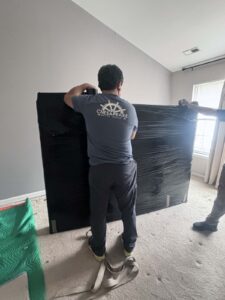
Here’s something that surprises a lot of people the first time they get two moving quotes back to back: a two-bedroom apartment on the third floor of a Federal Hill walk-up can cost more to move than a three-bedroom rowhome three blocks away with a driveway. Same city. Same crew. Same day of the week. Different price entirely.
If you landed here searching for apartment movers in Baltimore, Baltimore apartment movers, Annapolis apartment moving and storage, or even Roscoe apartment movers, you’re probably asking some version of the same question: is moving an apartment actually cheaper than moving a house, and why do the quotes look so different depending on where you’re going?
The short answer is that square footage matters less than most people think. What actually drives the bill is access — how far the truck can get from your front door, how many flights of stairs are involved, whether a building controls when you’re allowed to move at all, and how much extra time all of that adds to a job that’s billed by the hour.
Below, we’ll walk through exactly how that plays out for apartments and houses in Baltimore, with real numbers, real fee names, and a few things that are specific to this city that you won’t find in a generic moving guide.
Why Movers Price by the Clock, Not the Square Foot
Local moves — anything within roughly 50 to 100 miles — are almost always billed hourly rather than by weight or distance. That’s actually good news for renters and homeowners alike, because you’re only paying for the time your crew is actually working. But it also means two moves with the exact same amount of stuff can land at very different totals, because the clock keeps running through every obstacle in between.
Nationally, a two-person crew with a truck runs somewhere in the neighborhood of $85 to $200 an hour, with most companies setting a two- to four-hour minimum to cover dispatch and travel time. Baltimore tends to sit toward the lower-to-middle end of that range compared with cities like Boston or DC.
On top of the hourly rate, most legitimate movers disclose a handful of “accessorial” fees that only apply when your specific building or house triggers them — and this is really where the apartment-vs-house comparison gets interesting.
Studio, One-Bedroom, or Multi-Bedroom: What Small Move Pricing Actually Looks Like
People searching for small move pricing are often shocked that a studio move isn’t dramatically cheaper than a one-bedroom. Here’s why: minimums. If a company’s floor is three billable hours, your studio move gets charged for three hours whether it takes ninety minutes or the full window.
As a rough, non-binding benchmark for what full-service local moves tend to run:
- Studio apartment: 2–3 hours, two movers — roughly $260–$550
- One-bedroom apartment: 3–4 hours, two movers — roughly $450–$900
- Two-bedroom apartment or townhome: 4–6 hours, two to three movers — roughly $700–$1,400
- Three-bedroom house: 6–8 hours, three to four movers — roughly $1,400–$2,800
- Four-plus bedroom house: 8+ hours, four movers — roughly $2,200–$5,500
These are ballpark, industry-wide figures meant to help you plan — your actual Chesapeake quote will reflect your specific address, floor, and access, which is why we walk through those details before giving you a number.
The Apartment Wildcards: Elevators, Buildings, and the Paperwork Nobody Warns You About
Apartment buildings, especially anything with a leasing office, a doorman, or a freight elevator, tend to come with rules that a single-family home simply doesn’t have.
The Certificate of Insurance (COI). Many managed buildings won’t let a moving crew in the door — literally — without a COI naming the building as an additional insured, often for $1 million in general liability. Request this from your moving company at least a week ahead, using the exact wording your leasing office gives you. Skip it, and you can lose your elevator reservation entirely on move day.
Elevator scheduling. Buildings with a shared elevator frequently restrict moves to a two- to four-hour window, sometimes only on weekdays, and may charge a flat elevator fee in the $75–$200 range just to cover the wait time and setup. Miss your window and you may be rescheduling.
Stair fees. No elevator? Expect a per-flight charge, typically $50–$100 for each flight beyond the first, since every trip up and down adds real labor time.
Long carry fees. If the truck can’t park within about 75 feet of your door — common in denser parts of Baltimore where street parking is tight — most movers add $50–$200 to cover the extra distance.
Building move-in restrictions. Some properties only allow moves during specific hours, block weekend move-ins entirely, or require advance notice to the concierge or property manager. None of this is a scam — it’s the building protecting its lobby, elevator, and other residents — but it does mean apartment moves often need more advance coordination than houses do.
The House Wildcards: What Baltimore’s Rowhomes Bring to the Table
Houses trade one set of challenges for another, and in Baltimore, that mostly means rowhomes. The city’s classic two- and three-story rowhouses, many built with narrow interior staircases and those famous white marble stoops out front, weren’t designed with king-size mattresses or sectional sofas in mind.
An interior staircase under 30 inches wide, with a tight turn at the landing, can turn a simple couch delivery into a puzzle that requires disassembly — or, occasionally, hoisting a piece through a second-story window.
There’s usually no elevator fee and no building office dictating your moving hours, which genuinely simplifies scheduling. But a house typically holds more volume than an apartment of the same bedroom count once you factor in a basement, attic, and yard, so the job itself often runs longer even without a single official “fee” attached to it.
And if your rowhome doesn’t have a driveway, movers on a narrow city street may need a parking permit to hold space at the curb — worth checking with the city before move day rather than after.
Where Storage Fits Into an Apartment Move
This is where the apartment-and-storage searches make sense. Lease timing rarely lines up perfectly — your old lease might end on the 30th while your new one doesn’t start until the 5th, or you’re downsizing from a house into a smaller unit and simply don’t have room for everything on day one.
In both cases, short-term storage bridges the gap without forcing you to rush a decluttering decision you’re not ready to make. We offer flexible, climate-controlled storage for exactly this reason, whether you need a few weeks or a longer-term solution while an Annapolis or Baltimore apartment search plays out.
A Real Side-by-Side Example
Picture two moves happening on the same Saturday. One is a two-bedroom apartment on the third floor of a Locust Point building: the crew needs a COI submitted in advance, a confirmed elevator window, and — if the elevator happens to be out of service that week — a stair fee added on top. The other is a three-bedroom rowhome in Canton with marble front steps and a narrow interior staircase, but a legal parking spot right out front.
The apartment move might finish faster once the crew is actually inside, but the coordination beforehand adds real time and a few line items to the estimate. The house move has no building paperwork at all, but the crew spends more time carefully walking furniture down a tight staircase and negotiating that classic marble stoop. Neither one is automatically cheaper — it depends entirely on the specifics.
Keeping Costs Down, Whichever One You’re Doing
A few things help regardless of what you’re moving out of:
- Book on a weekday or during the off-peak season if your timeline allows it
- Have boxes packed and labeled before the crew arrives — every minute they’re not waiting on you is a minute you’re not paying for
- Tell your movers about stairs, elevators, permits, or long carries when you get your quote, not on move day
- Get every potential fee in writing up front
- Donate or sell what you’re not taking — less volume means fewer hours, no matter the address
The Bottom Line
Moving an apartment and moving a house each come with their own built-in cost drivers — one set tied to a building’s rules and equipment, the other tied to a home’s size and Baltimore’s famously narrow rowhouse stairs. Knowing which wildcards apply to your specific address is the difference between a quote that holds and one that grows on move day.
Whether you’re navigating an elevator reservation downtown or a marble stoop in Canton, Chesapeake Moving Company handles both all the time. Our local moving services cover every corner of Baltimore and Annapolis, our team can handle full packing and unpacking if you’re short on time, and our flexible storage options are there if your move-out and move-in dates don’t quite line up.
Give us a call at (410) 620-8919 or request a free quote, and we’ll walk through your building or house specifically — no generic estimate, just a real number based on your actual move.