Every day your storefront sits closed for a move is a day of lost foot traffic, missed sales, and customers who might just wander into the shop next door instead. That’s the real difference between moving a business and moving a house — a house doesn’t have revenue riding on how fast the boxes get unpacked.
This checklist is built specifically for retail shops, boutiques, small offices, and warehouse-style spaces — not the sprawling, forty-desk corporate headquarters move. (If that’s your situation, our corporate relocation guide covers the enterprise side of things.) If you’re a business owner planning to relocate a storefront, a small office, or a warehouse floor somewhere around Baltimore or Towson, this is written for you.
8–12 Weeks Out: Lock Down the Logistics
This is the planning window most business owners underestimate. Commercial movers in the Baltimore area tend to book up fast, especially around the first and last weeks of the month when most commercial leases turn over.
- Confirm your new lease terms and access date. Know exactly when you can start moving fixtures and equipment in — landlords sometimes restrict access until a certificate of occupancy is issued.
- Book your commercial movers early. A full-service move that includes fixtures, shelving, and equipment takes more coordination than a standard office move, so give yourself real lead time rather than calling three weeks out.
- Walk both spaces with your move coordinator. Doorways, loading docks, stairwells, and freight elevator access all affect timing and crew size — this is worth doing in person, not over the phone.
- Set a moving budget that includes the “boring” costs. Signage, new business cards, utility deposits, and IT reconfiguration add up fast and rarely make it into the first draft of a moving budget.
6–8 Weeks Out: Handle the Paperwork Nobody Enjoys
This is the step that separates a business move from a household move, and it’s where a lot of Maryland business owners get caught off guard.
- Update your address with the Maryland Department of Assessments and Taxation. This is done through Maryland Business Express and keeps your business entity’s official records current.
- Check whether your Trader’s License needs to move with you. In Maryland, a Trader’s License is tied to a fixed location, issued through the Clerk of the Circuit Court in the county where you operate. If you’re relocating — even just across town — this typically needs to be updated, and the fee is based on your inventory’s wholesale value.
- Confirm any local permits tied to your old address, including signage permits, health permits (for food or personal care businesses), and occupancy permits for the new space.
- Notify your insurance provider so your commercial policy covers the new address and the moving process itself.
- Set up utilities and internet at the new location well in advance. Nothing stalls a reopening like waiting on an installation appointment that was booked too late.
4 Weeks Out: Plan the Inventory and Equipment Move
This is where retail relocation and warehouse relocation start to look genuinely different from a typical office move, so it’s worth planning separately.
For retail and storefront inventory:
- Do a full inventory count before the move — it’s the easiest way to catch shrinkage or damage claims later, and it makes restocking the new location far less chaotic.
- Decide what travels with the movers versus what gets marked down and sold before the move (moving less inventory usually means a faster, cheaper move).
- Flag anything fragile, high-value, or climate-sensitive — display cases, mirrors, electronics, specialty stock — so it gets packed and handled accordingly.
For warehouse or storage-heavy relocations:
- Map out pallet racking, shelving units, and any equipment that needs to be disassembled before transport.
- Confirm whether your new space has loading dock access or needs a lift gate truck.
- Plan for forklift or pallet jack availability at both ends, since not every crew or building has one on-site.
For office equipment and IT:
- Back up servers and critical data before anything gets unplugged.
- Label cables and ports before disconnecting workstations — this alone saves hours during reopening.
- Coordinate with your IT provider on network setup timing so you’re not waiting on connectivity to reopen.
2 Weeks Out: Tell People You’re Moving
A quiet move is a bad move for a business. Customers, vendors, and delivery services all need a heads-up.
- Update your Google Business Profile, website, and social media with the new address and reopening date — do this a week or two before the move, not the day after, so search results and maps stay current.
- Post signage at your current location with your new address and reopening date.
- Notify vendors and suppliers of the new delivery address so nothing gets shipped to a storefront you’ve already left.
- If you have loyal repeat customers, a short personal email or in-store announcement goes a long way toward making sure they follow you to the new address.
Moving Week: Pack With the Reopening in Mind
The goal isn’t just to get everything into boxes — it’s to get everything into boxes in a way that makes setup at the new location fast.
- Pack and label by department, section, or shelf location, not just by room. “Front register area” is more useful on moving day than “miscellaneous.”
- Keep a “first day” box or two — register supplies, basic tools, chargers, and anything you’ll need within the first hour of reopening — separate from everything else so it’s not buried under pallets of stock.
- If you’re using full-service movers in Baltimore for this stage, walk the crew through your labeling system before they start; a few minutes of orientation saves confusion during unloading.
Minimizing Business Closure Time
This is usually the number one priority for a business owner, and it deserves its own section rather than a bullet buried in a longer list.
Move overnight or on your slowest day. Retail shops often move Sunday night into Monday, or overnight after closing, so the “closed” sign is up for the shortest possible window.
Consider a phased move. For businesses that can operate in a reduced capacity, moving non-essential fixtures and back-stock first — while the storefront stays open — and saving the final push for a single closure day can cut your total downtime significantly.
Set a realistic reopening date, and communicate it clearly. A business that reopens a day late with no warning loses more trust than one that quietly pushed its reopening date back with plenty of notice.
Have utilities, internet, and signage ready before moving day, not after. The single biggest cause of an extended closure isn’t the move itself — it’s waiting on something that should have been scheduled weeks earlier.
Moving Day: What a Commercial Crew Actually Handles
A full commercial move typically covers:
- Disassembly and reassembly of shelving, display cases, and fixtures
- Safe transport of point-of-sale systems, monitors, and other electronics
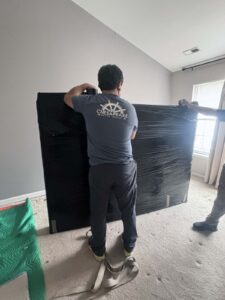
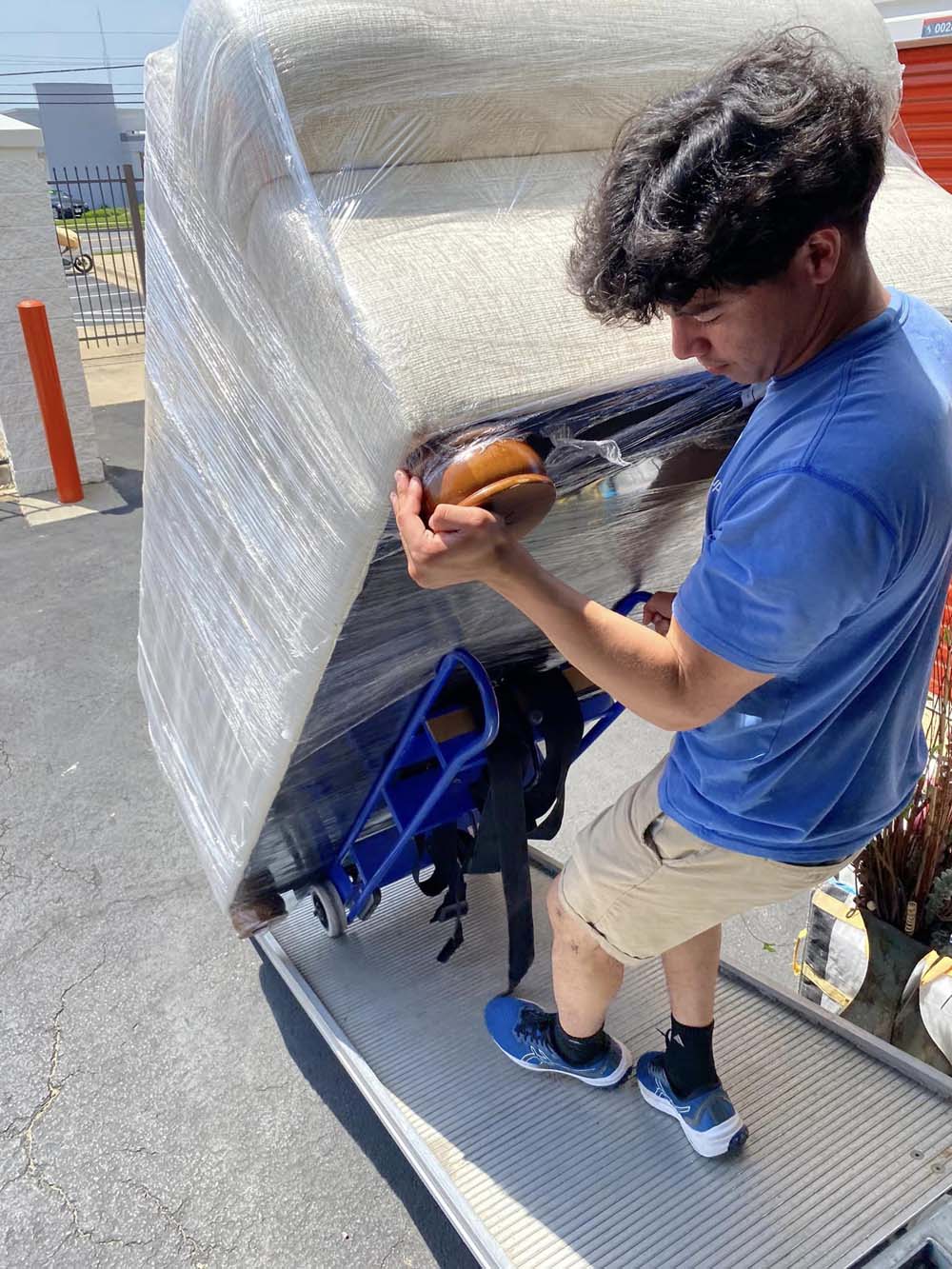
- Furniture and equipment padding, wrapping, and load securing
- Loading dock or freight elevator coordination at both locations
- Placement of fixtures and equipment at the new space — not just a drop-off at the door
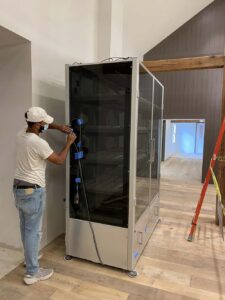
If your move includes a mix of retail fixtures, office furniture, and warehouse equipment, make sure your mover has experience across all three — a crew that’s only ever moved cubicles isn’t necessarily equipped for a walk-in cooler or a rack of pallet shelving.
Reopening Week: The Last Mile
- Do a full walkthrough before opening the doors — check that signage, lighting, POS systems, and internet are all functioning.
- Confirm your new address is live and correct across Google, Yelp, and any delivery or booking platforms customers use to find you.
- Keep moving boxes and packing material out of customer-facing areas as quickly as possible; a construction-zone feel undercuts a “grand reopening” more than people expect.
- Consider a small reopening event or promotion — it gives past customers a reason to make the trip to your new address instead of drifting toward whichever business happened to be closer.
How Chesapeake Moving Co. Handles Commercial Moves
We work with retail shops, boutiques, small offices, and warehouse-style businesses throughout Baltimore, Towson, and the surrounding Maryland communities, and every commercial move gets planned around your reopening date — not the other way around. That means scheduling around your slowest hours, handling fixtures and equipment with the right tools, and coordinating timing so your closure window stays as short as it can realistically be.
Whether you’re relocating a single storefront or coordinating a move across multiple business locations, we’ll walk both spaces with you ahead of time and build a plan around what actually needs to happen, not a generic moving-day script.
Frequently Asked Questions
How far in advance should I book commercial movers for a storefront relocation? Six to eight weeks is a safe window for most storefront moves, and longer if you’re also coordinating build-out or permits at the new location.
Do I need a new Trader’s License if I’m just moving across town? In most cases, yes — a Trader’s License in Maryland is tied to a specific fixed location, so a relocation typically requires an updated license through your county Clerk of the Circuit Court.
Can you move us overnight or on a weekend to reduce closure time? Yes. Overnight and weekend commercial moves are common specifically because they minimize the time a storefront sits closed during business hours.
Do you handle warehouse and inventory-heavy moves, not just office furniture? Yes — pallet racking, bulk inventory, and loading dock coordination are all part of our commercial moving services, alongside standard office and retail fixtures.
Planning a business or storefront move in the Baltimore area? Get a free commercial moving quote or call Chesapeake Moving Co. at (410) 620-8919 to build a timeline around your reopening date.