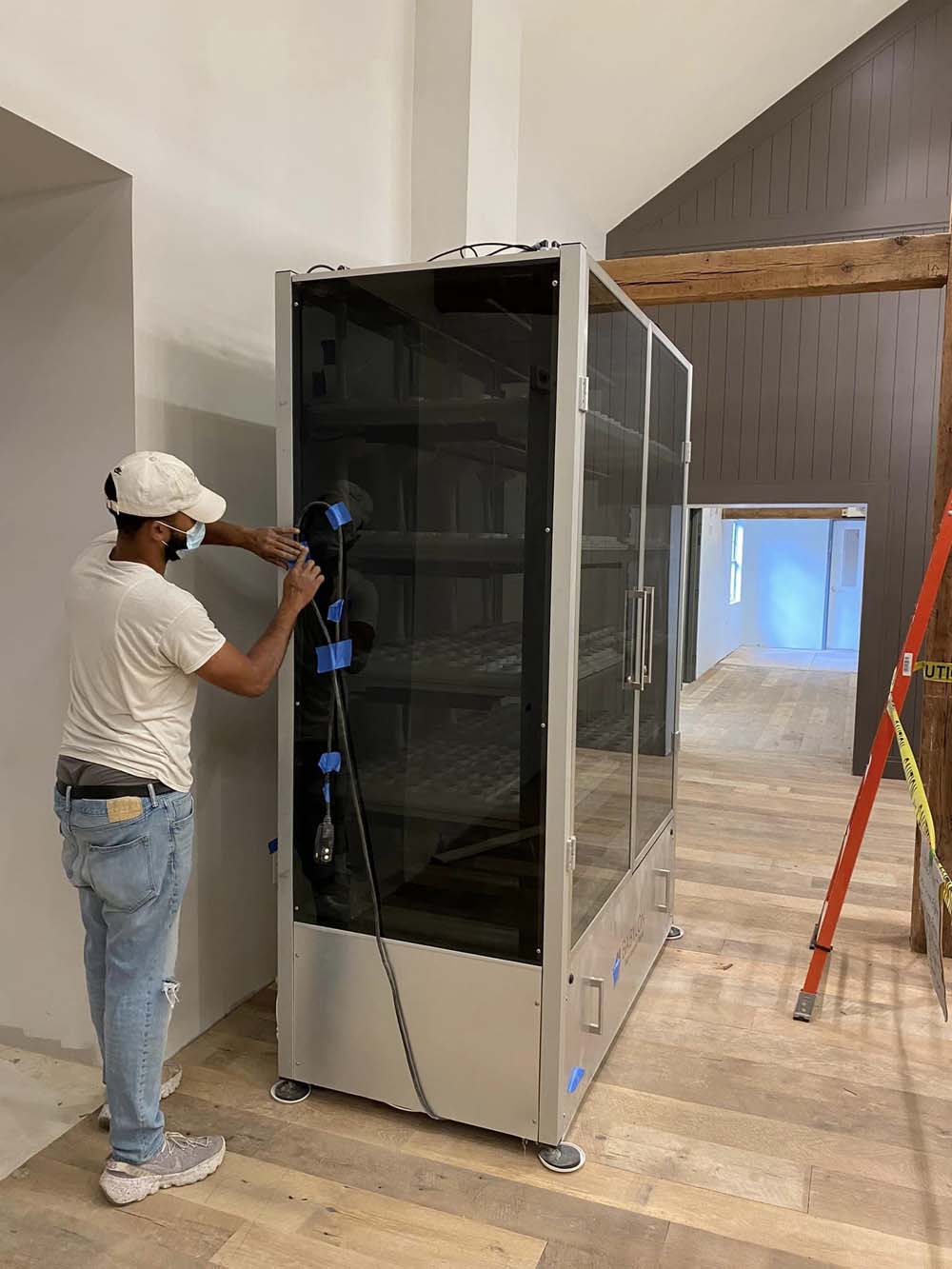
“Industrial moving” gets used as a catch-all term, but it actually covers a wide range of projects — from relocating a warehouse full of palletized inventory to rigging a 12,000-pound CNC machine through a doorway it barely fits through.
Those are genuinely different jobs, requiring different equipment, different expertise, and in some cases, different regulatory compliance entirely. This guide breaks down what’s actually involved, so you know what you’re evaluating before you start calling companies.
What Counts as Industrial or Heavy Equipment Moving
It helps to think of this as a spectrum rather than one category:
On the lighter end: palletized inventory, warehouse racking, smaller machinery that can be moved with a forklift or pallet jack, and general dock-to-dock freight — this overlaps significantly with standard commercial moving and logistics.
On the heavier end: large, fixed manufacturing equipment — presses, CNC machines, industrial ovens, generators, boilers — that requires rigging (specialized lifting and positioning using cranes, hoists, or hydraulic jacks) to safely relocate. This is a distinct trade from general moving, with its own certifications and safety regulations.
Knowing where your project falls on that spectrum is the first real decision point, because it determines who you should actually be calling.
Rigging and Crating: What It Actually Involves
Rigging is the process of safely lifting, positioning, and transporting heavy or awkwardly shaped equipment using specialized tools — cranes, hoists, machine skates, hydraulic toe jacks, and portable gantry systems for moving loads in tight spaces where a crane can’t operate.
It’s a genuinely technical discipline: riggers plan load paths, calculate weight distribution, and select equipment rated for the specific load before anything gets lifted.
Crating is often part of the same project — building custom wood crates sized and braced for irregular or fragile equipment, particularly for machinery that’s being shipped a longer distance or stored before reinstallation.
Forklift and Pallet Jack Transport: The Lighter End of Industrial Moving
Not every industrial move needs a rigging crew. Palletized goods, warehouse shelving, and machinery light enough to move on a pallet jack or standard forklift fall into a different category — closer to freight logistics than heavy rigging.
This is typically the more accessible end of industrial moving, and it’s where general commercial movers with the right equipment (loading docks, liftgates, pallet jacks) can genuinely help, without needing crane certifications or specialized rigging engineering.
OSHA-Compliant Equipment Moving: Why It’s Not Optional
If your project involves crane or rigging work, federal safety regulation isn’t a nice-to-have — it’s a legal requirement. A few things worth knowing:
- Qualified riggers are required for crane-involved lifts under OSHA’s crane and derrick standards — this means a documented combination of training, knowledge, and demonstrated ability, not just experience.
- Cranes must be inspected by a qualified person, generally on an annual basis, with additional pre-use checks.
- A designated signal person, tested and qualified under OSHA standards, is required on lifts where hand signals coordinate crane movement.
- Rigging equipment itself — slings, shackles, hooks — must be rated for the load and inspected before each use, with defective gear pulled from service immediately.
This regulatory structure exists because the failure modes in rigging work are serious — equipment failure or improper rigging can cause real injury, not just property damage. It’s also exactly why “any moving company can handle industrial equipment” is a misconception worth being skeptical of.
Industrial rigging is its own specialized field, built on training and certification that a general moving company doesn’t automatically have.
Warehouse-to-Warehouse Relocation: A Different Kind of Logistics Project
Relocating an entire warehouse or manufacturing floor — as opposed to a single piece of equipment — adds a layer of project logistics on top of the physical move:
- Dock scheduling at both locations, especially when multiple truckloads are involved.
- Inventory and racking coordination, so shelving and stock arrive in a sequence that lets operations restart quickly rather than in a random order that has to be re-sorted.
- Minimizing production downtime, often by phasing the move — relocating non-critical equipment first while the facility keeps running, and scheduling the highest-impact equipment for the shortest possible closure window.
This planning work matters as much as the physical transport, especially for a business where downtime has a direct cost.
Freight Movers, Riggers, and General Commercial Movers: Who Does What
This distinction gets blurry in search results, so it’s worth being direct about it:
- General commercial movers handle office furniture, electronics, and lighter equipment — the category most business relocations fall into.
- Freight and logistics companies handle palletized goods and dock-to-dock trucking, often for warehouse or distribution-focused moves.
- Certified rigging companies handle heavy, fixed machinery requiring cranes, hoists, or specialized lifting equipment, under OSHA’s rigging and crane regulations.
A project can genuinely need more than one of these at once — for example, a facility relocation that includes office furniture (general mover), palletized inventory (freight/logistics), and a few large fixed machines (rigging specialist).
Knowing this upfront helps you scope out quotes accurately instead of assuming one company can handle all three.
Questions to Ask Before Hiring an Industrial Mover or Rigger
- What’s the heaviest or most complex item in this project, and does your team have direct experience with that specific type of equipment?
- Are your riggers OSHA-qualified, and can you show documentation for crane inspections?
- Do you provide engineering or load-path planning for the lift, or just the labor?
- What insurance coverage applies specifically to high-value machinery during transport?
- How do you handle a project that includes multiple categories — office equipment, palletized freight, and heavy machinery — is that coordinated under one plan or several vendors?
Where Chesapeake Moving Co. Fits In
We want to be direct about this rather than stretch our services to sound like something we’re not: we’re a licensed and insured commercial mover based in Baltimore, and our strength is general commercial and warehouse-adjacent moving — office furniture, electronics, palletized and dock-accessible goods, and equipment that doesn’t require crane rigging to relocate safely.
For projects on the lighter end of this spectrum — a warehouse relocation involving racking, palletized inventory, and standard equipment — that’s work we can genuinely help plan and execute.
For heavy, fixed machinery requiring certified rigging, crane work, or OSHA-regulated lifting, that’s a specialized trade best handled by a dedicated industrial rigging company, and we’ll tell you honestly if that’s what your project needs rather than take on work outside our equipment and certifications.
If you’re not sure which category your project falls into, that’s worth a direct conversation before you request quotes — it’ll save you time either way.
Frequently Asked Questions
What’s the difference between industrial moving and rigging? Industrial moving is a broad term covering everything from palletized freight to heavy machinery. Rigging specifically refers to the specialized, OSHA-regulated process of lifting and positioning heavy or awkward loads using cranes, hoists, or similar equipment.
Do I need a certified rigger for my equipment move? If the equipment requires a crane, hoist, or specialized lifting method to relocate safely, yes. If it’s palletized or forklift-transportable, a general commercial mover with the right equipment may be sufficient.
Can one company handle both office equipment and heavy machinery in the same relocation? Sometimes, but often a facility move involves more than one type of vendor — a general mover for office and lighter equipment, and a certified rigging company for heavy fixed machinery.
Do you handle warehouse relocations? We handle warehouse-adjacent moves involving racking, palletized goods, and standard equipment. For heavy machinery requiring certified rigging, we’ll point you toward a specialist rather than take on work outside our scope.
Planning a commercial or warehouse relocation in the Baltimore area? Get a commercial moving quote or call Chesapeake Moving Co. at (410) 620-8919, and we’ll help you figure out exactly what your project needs.