If you’ve come across the term “FF&E moving” while planning a renovation, relocation, or new opening, you’re dealing with a more specialized category than a typical office or household move — and it’s worth understanding what that category actually involves before you start calling moving companies.
FF&E stands for Furniture, Fixtures, and Equipment — the physical assets inside a hotel, restaurant, or office that aren’t part of the building itself but are essential to how the space functions.
This guide breaks down what FF&E moving actually covers, what makes it different from a standard commercial move, and what to ask before you hire anyone for the job.
What FF&E Actually Covers
The specifics look different depending on the type of business:
For hotels: case goods (dressers, nightstands, headboards), mattress sets, soft seating, lobby and lounge furniture, artwork and mirrors, and back-of-house items like housekeeping carts and linens.
For restaurants: dining furniture, booths, bar equipment, kitchen equipment (ranges, refrigeration, prep stations), POS systems, and décor elements tied to the brand’s look.
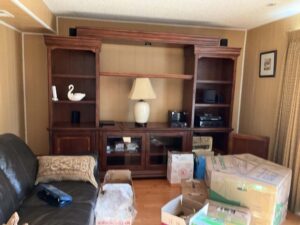
For offices: workstations, conference room furniture, reception furniture, and increasingly, the AV and technology equipment built into modern office design.
The common thread is that all of it needs to be handled, transported, and often reinstalled in a specific place, according to a floor plan or designer’s layout — not just moved from point A to point B.
When FF&E Moving Comes Up
A few scenarios tend to trigger this kind of project:
- A renovation or refresh, where existing furniture and fixtures need to come out (sometimes into storage, sometimes for liquidation) before new FF&E goes in.
- A rebrand, where a hotel or restaurant is changing its look and feel, requiring a full swap of furniture and fixtures to match a new design standard.
- A relocation, where an existing business is moving its FF&E to a new address rather than replacing it.
- A new opening, where FF&E is arriving from multiple vendors and needs to be received, staged, and installed room by room before opening day.
What Makes FF&E Moving Different From a Standard Commercial Move
A regular office or business move is mostly about getting everything from one place to another intact and functional. FF&E projects, especially larger ones tied to a renovation or new opening, tend to involve a few extra layers:
- Receiving and staging shipments from multiple vendors, often over a period of weeks, rather than one truck showing up on one day.
- Room-by-room installation according to a designer’s floor plan, not just “put the furniture somewhere reasonable.”
- Punch-list management — tracking what’s installed, what’s missing, and what needs a follow-up visit before the space opens.
- Tight timelines tied to a reopening or occupancy date, which usually means the project is planned in phases rather than a single moving day.
This is useful to understand even if you’re hiring out the work, because it tells you what questions to ask.
What to Ask Any FF&E Mover Before You Hire
Whether you’re comparing a few companies or already have someone in mind, these questions will tell you a lot fast:
- Do you have warehousing available if shipments arrive before the space is ready? Not every mover has this, and it matters if your vendors don’t all deliver on the same schedule.
- How do you handle high-value or fragile items during transport? Ask specifically about mattress sets, artwork, and any specialty equipment relevant to your business.
- What’s your experience with projects in my specific industry? A company that’s handled hotel case goods before will move differently than one that hasn’t.
- How do you manage installation against a floor plan, and how do you track what’s left to do? This is really asking whether they have real project management behind the job, not just a crew and a truck.
- What’s included in your insurance coverage for this kind of project? FF&E often involves higher-value items than a typical office move, and it’s worth confirming coverage matches that.
Where Chesapeake Moving Co. Fits In
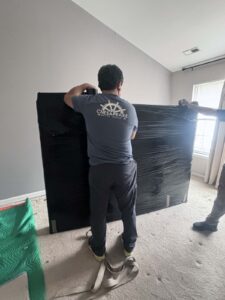
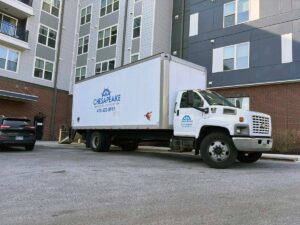
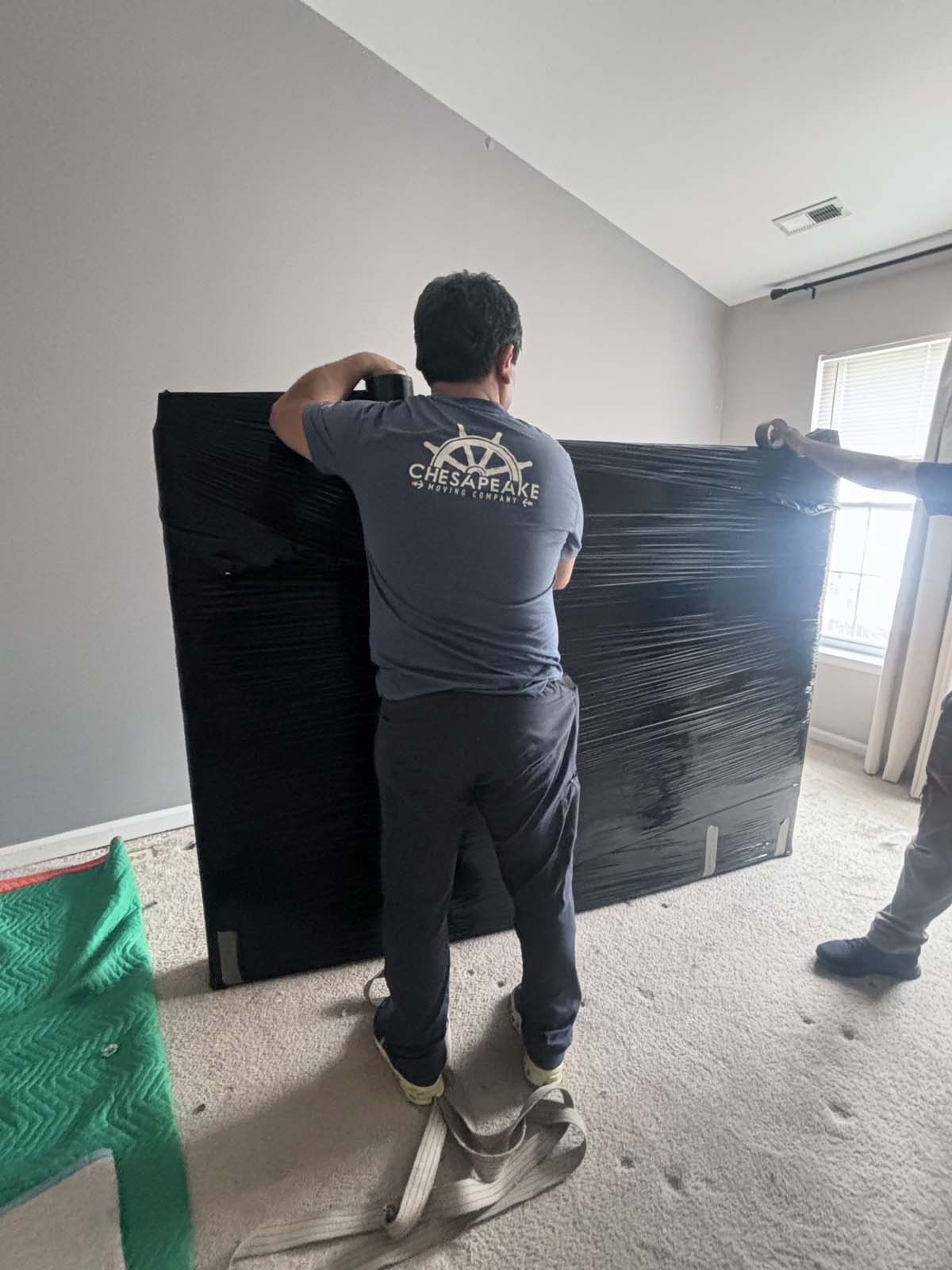
We want to be straightforward about this rather than stretch our services to sound like something we’re not: we’re a licensed and insured commercial mover based in Baltimore, and our core strength is handling office furniture, electronics, filing systems, and specialty equipment carefully — with disassembly, reassembly, secure transport, and short-term storage available as part of the job.
That makes us a solid fit for smaller-scale FF&E-adjacent work: a local restaurant relocating its dining furniture and equipment to a new address, a boutique hotel or office moving and reinstalling existing furniture during a light renovation, or a business that needs its FF&E carefully packed, stored briefly, and set up again at a new location.
For a large-scale hotel brand renovation involving dozens of rooms, multiple vendor shipments landing over several weeks, and full project management with punch-list tracking, a dedicated hospitality FF&E logistics firm is genuinely likely to be the better fit — that’s a different scale of operation than a regional commercial mover typically runs.
If you’re not sure which category your project falls into, that’s a good first conversation to have before booking anything — we’re happy to talk through the scope honestly and point you in the right direction even if that ends up being someone else.
Frequently Asked Questions
What does FF&E stand for? Furniture, Fixtures, and Equipment — the movable and semi-permanent items inside a hotel, restaurant, or office that support how the space functions, as distinct from the building structure itself.
Is FF&E moving different from a regular office move? For smaller projects, not dramatically. For larger renovation or new-opening projects involving multiple vendor shipments and room-by-room installation to a designer’s plan, yes — it typically requires more warehousing and project management than a standard move.
Do you handle restaurant kitchen equipment or hotel furniture? We handle general furniture, electronics, and specialty equipment for local businesses, including restaurants and offices, with careful transport and short-term storage available. For large hotel-scale FF&E projects with extensive warehousing and installation needs, we’ll be upfront if that’s better suited to a specialized firm.
Can you store FF&E items during a renovation? Short-term storage is available as part of a commercial move. For longer-term or larger-volume warehousing tied to a big renovation project, ask us directly so we can tell you honestly whether that fits what we offer.
Planning a move or light renovation involving business furniture and equipment in the Baltimore area? Get a commercial moving quote or call Chesapeake Moving Co. at (410) 620-8919, and we’ll tell you honestly whether your project is a good fit.